Understanding the nuances of branding, marketing, and sales is crucial for any business striving to thrive in today’s competitive landscape. This exploration delves into the distinct roles of each discipline, highlighting their interdependencies and how they contribute to achieving business objectives.
We’ll examine various strategies, from crafting compelling brand identities to implementing effective marketing campaigns and streamlining sales processes. This comprehensive guide will empower you to navigate the intricacies of these essential business functions and understand their synergistic relationship.
Defining the Terms
Understanding the distinct roles of branding, marketing, and sales is crucial for any successful business. These three disciplines are interconnected, each contributing a unique element to the overall customer journey. Their interplay shapes a company’s image, attracts potential customers, and ultimately drives revenue.
Distinguishing Branding, Marketing, and Sales
These three concepts, while interconnected, have unique focuses and responsibilities. A clear understanding of each allows for more effective resource allocation and strategic alignment within a business.
| Term | Definition | Focus | Key Activities |
|---|---|---|---|
| Branding | Branding is the process of creating a unique identity for a company, product, or service. It encompasses everything from the logo and visual style to the brand values and mission statement. | Building a strong brand perception. | Developing brand guidelines, crafting a brand story, managing brand reputation, and creating a consistent brand experience across all platforms. |
| Marketing | Marketing encompasses the activities aimed at promoting a product or service to attract and engage potential customers. It focuses on understanding the target audience, developing effective communication strategies, and driving demand. | Attracting and engaging potential customers. | Market research, content creation, social media marketing, advertising campaigns, public relations, email marketing, and event planning. |
| Sales | Sales is the process of converting potential customers into paying customers. It focuses on building relationships, addressing customer needs, and closing deals. | Converting potential customers into paying customers. | Prospecting, qualifying leads, presenting product/service value propositions, handling objections, negotiating contracts, and managing customer relationships. |
Interplay and Overlap
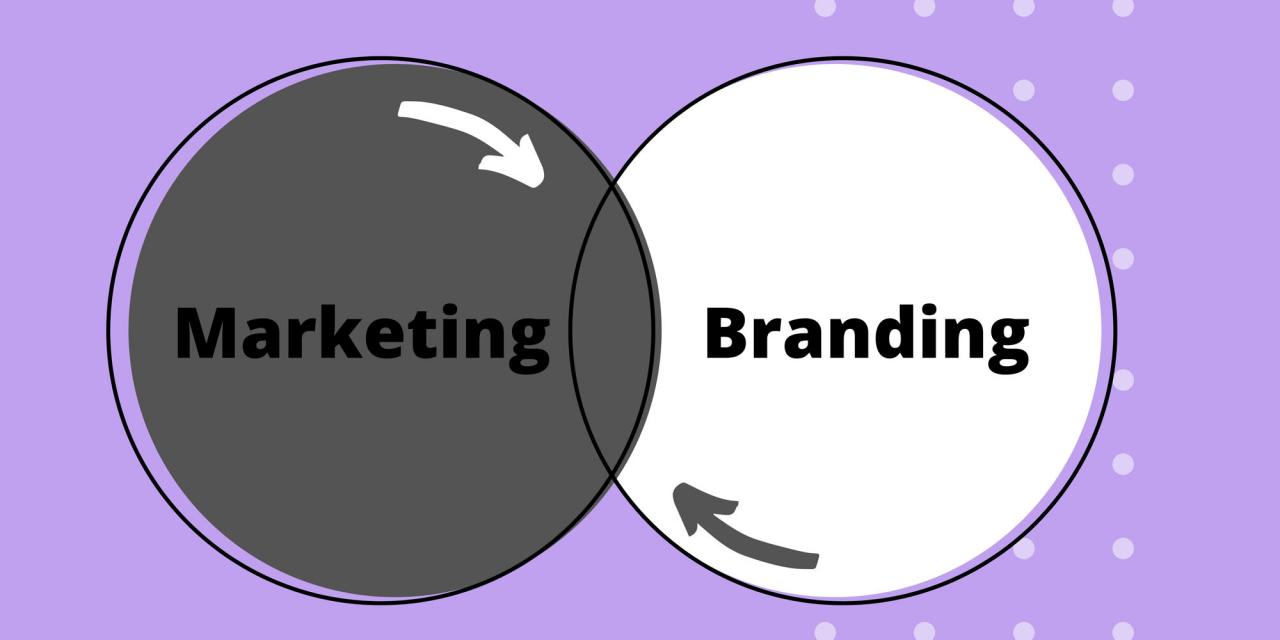
Branding, marketing, and sales are not independent silos; they work in tandem. A strong brand provides a foundation for effective marketing, and successful marketing efforts drive sales. Effective sales strategies also contribute to the brand’s image.
- Branding provides the identity that marketing communicates. A cohesive brand story enables marketing messages to resonate more effectively with the target audience. A strong brand reputation also increases trust, facilitating sales efforts.
- Marketing supports the brand by generating awareness and interest. Well-executed marketing campaigns attract potential customers, leading to more qualified leads for the sales team.
- Sales activities contribute to the brand’s reputation by delivering positive customer experiences. Customer feedback from sales interactions informs marketing strategies and brand messaging, creating a continuous cycle of improvement.
Differences Between the Disciplines
While interrelated, the three disciplines have distinct differences in their approach and goals.
- Branding focuses on building a consistent and recognizable image, whereas marketing uses various tools to create demand. Sales is focused on the final conversion of the customer.
- Branding is a long-term strategy, while marketing and sales often have shorter-term goals and timelines. Marketing and sales activities are directly related to specific products, campaigns, or customer segments, and must be monitored and adapted as needed.
Branding Strategies
Branding strategies are crucial for establishing a unique identity and building a loyal customer base in a competitive market. A well-defined brand strategy Artikels the core values, target audience, and overall messaging that will be used across all marketing and communication efforts. Effective branding goes beyond just a logo; it encompasses the entire customer experience.
Various Branding Strategies and Approaches
Different approaches cater to various business needs and target audiences. Some prominent strategies include:
- Brand Storytelling: This strategy leverages narratives to connect with consumers on an emotional level. Stories humanize the brand, creating a deeper connection and fostering brand loyalty. A compelling narrative can highlight the brand’s origins, values, and mission, resonating with customers who share those values.
- Brand Positioning: This involves defining the brand’s unique place in the market. It focuses on identifying a specific niche or segment and articulating how the brand differentiates itself from competitors. Strong brand positioning helps attract the ideal customer base and builds a sustainable competitive advantage.
- Brand Personality: Defining a distinct personality for the brand, whether playful, sophisticated, or trustworthy, can significantly impact consumer perception. A consistent brand personality across all touchpoints reinforces the brand’s image and values, attracting customers who resonate with that persona.
- Brand Experience Design: This approach focuses on creating a holistic brand experience across all touchpoints. From website design to customer service interactions, every element should contribute to the overall brand image and reinforce the desired message. This creates a cohesive and memorable brand journey.
Brand Consistency Across Platforms
Maintaining brand consistency across all platforms is paramount for building recognition and trust. This involves ensuring that the brand’s visual identity, messaging, and tone of voice remain consistent regardless of the channel. This uniformity across all platforms reinforces brand recognition, strengthens customer trust, and enhances brand perception.
- Visual Identity: Consistency in logo usage, color palettes, typography, and imagery is essential. This ensures a recognizable visual identity across all marketing materials, websites, social media profiles, and physical locations.
- Messaging and Tone of Voice: A consistent brand voice and messaging style are vital for creating a cohesive brand narrative. This ensures that all communication, whether in advertisements, social media posts, or customer service interactions, aligns with the brand’s core values and personality.
- Customer Experience: The customer journey should be consistent across all touchpoints, from initial contact to post-purchase support. A unified and positive experience across the entire process reinforces brand loyalty and promotes positive word-of-mouth marketing.
Comparing and Contrasting Branding Styles
Different branding styles cater to different target audiences and industry contexts. Some popular styles include minimalist, modern, vintage, and bold.
- Minimalist: Emphasizes simplicity and clean design. This style often uses a limited color palette and focuses on clear typography, creating a sophisticated and modern aesthetic.
- Modern: Incorporates current design trends and a forward-looking approach. Modern branding is often characterized by clean lines, contemporary fonts, and a focus on functionality.
- Vintage: Evokes a nostalgic and timeless feel. This style often incorporates classic imagery, typography, and color palettes that evoke a sense of tradition and history.
- Bold: Creates a memorable and impactful impression through a strong visual presence. Bold branding often utilizes vibrant colors, striking imagery, and unconventional design elements to grab attention.
Successful Branding Campaigns
Illustrative examples demonstrate the power of effective branding strategies.
| Brand | Strategy | Impact |
|---|---|---|
| Nike | Leveraging storytelling and athlete endorsements. | Established a strong brand identity associated with athleticism, performance, and empowerment. |
| Apple | Focusing on minimalist design and user-centric experiences. | Cultivated a loyal customer base by emphasizing innovative technology and premium aesthetics. |
| Coca-Cola | Maintaining a consistent brand image and emotional connection. | Built a global brand recognized for its history, cultural relevance, and positive associations. |
| Starbucks | Creating a unique brand experience through premium coffee and a welcoming atmosphere. | Developed a strong brand identity associated with quality, experience, and social connection. |
Marketing Approaches
Marketing is the bridge connecting a brand with its target audience. Effective marketing strategies are crucial for building brand awareness, driving customer engagement, and ultimately, generating profitable leads. It encompasses a wide range of methods, from traditional advertising to sophisticated digital campaigns. A well-defined marketing plan can significantly impact a company’s growth trajectory and profitability.A comprehensive marketing approach considers various factors, including the target audience’s demographics, psychographics, and media consumption habits.
This tailored strategy ensures the marketing message resonates with the intended recipients, fostering a stronger connection and increasing the likelihood of conversions.
Digital Marketing Methodologies
Digital marketing has revolutionized how businesses reach and engage with customers. It offers a multitude of channels, each with unique strengths and weaknesses. Leveraging these channels effectively requires a strategic understanding of the target audience’s online behavior and preferences.
- Search Engine Optimization (): involves optimizing a website and its content to improve its ranking in search engine results pages (SERPs). Higher rankings lead to increased organic traffic, enhancing brand visibility and driving potential customers to the website. For example, a clothing retailer optimizing its website for relevant s like “men’s fashion” or “winter jackets” will see an increase in visibility when potential customers search for those terms.
- Social Media Marketing: Platforms like Facebook, Instagram, and Twitter offer powerful tools for brand building and customer interaction. Targeted advertising campaigns on these platforms allow businesses to reach specific demographics and interests, promoting engagement and driving website traffic. A successful social media strategy for a coffee shop, for instance, might involve posting high-quality images of their beverages, running contests, and responding promptly to customer comments.
- Content Marketing: Content marketing focuses on creating valuable and engaging content that attracts and retains a target audience. This includes blog posts, articles, videos, infographics, and more. By providing insightful and helpful content, businesses can establish themselves as thought leaders in their respective industries, fostering trust and attracting potential customers. A software company, for example, could publish a series of articles on best practices for using their software.
- Email Marketing: Email marketing remains a powerful tool for direct communication with potential and existing customers. Personalized email campaigns can nurture leads, promote products or services, and drive sales. A furniture retailer, for instance, could send targeted emails promoting sales on specific furniture pieces or announcing new product launches.
Traditional Marketing Methods
Traditional marketing methods, while sometimes considered less effective in the digital age, still play a crucial role for certain industries or audiences. A blend of digital and traditional strategies often yields the best results.
- Print Advertising: Newspapers, magazines, and brochures remain effective channels for reaching specific demographics. Print advertising can be particularly useful for targeting local businesses or customers who prefer tangible materials. A local bakery, for instance, might use flyers distributed in the neighborhood to promote its latest offerings.
- Television and Radio Advertising: Television and radio commercials continue to have the potential to reach large audiences. Their effectiveness depends on the specific target demographic and the cost-benefit analysis for the given campaign. A car manufacturer, for instance, could use a television advertisement to showcase the features and benefits of a new model.
- Public Relations (PR): Building relationships with media outlets and influencers can generate positive publicity and enhance brand reputation. PR efforts can create awareness and generate positive press coverage. A technology startup, for example, might leverage PR to announce its latest product launch or highlight its innovative technology.
Marketing Metrics for Measuring Success
Measuring the effectiveness of marketing campaigns is essential for optimizing strategies and maximizing return on investment. Various metrics can be tracked to assess performance.
| Metric | Description |
|---|---|
| Website Traffic | The number of visitors to a website, which can be tracked using tools like Google Analytics. |
| Conversion Rate | The percentage of visitors who complete a desired action, such as making a purchase or signing up for a newsletter. |
| Customer Acquisition Cost (CAC) | The cost of acquiring a new customer. This metric is crucial for evaluating the efficiency of marketing campaigns. |
| Return on Investment (ROI) | The profitability of a marketing campaign, calculated by comparing the revenue generated to the cost of the campaign. |
Sales Processes
The sales process is a critical bridge between the marketing efforts that generate leads and the closing of deals that ultimately translate into revenue. A well-defined and executed sales process ensures consistent, predictable results and allows for the efficient allocation of resources. This process encompasses various stages, from initial contact to final customer acquisition.Effective sales processes aren’t simply about making a sale; they are about building lasting relationships and fostering customer loyalty.
This long-term approach ensures repeat business and positive word-of-mouth referrals. Understanding the intricacies of the sales process is key to maximizing revenue and profitability.
Lead Generation Strategies
Generating leads is the first crucial step in the sales process. It involves identifying and attracting potential customers who are interested in the products or services being offered. This stage often relies on marketing activities like content marketing, social media campaigns, and paid advertising. Each method employs distinct strategies for capturing qualified leads.
- Content marketing attracts potential customers by providing valuable and relevant content, such as blog posts, articles, or videos. This approach builds trust and positions the company as a thought leader in its industry, ultimately attracting high-quality leads.
- Social media campaigns leverage the power of social networks to reach a broader audience and engage with potential customers. These campaigns utilize targeted advertising and organic posts to create awareness and generate leads.
- Paid advertising involves using online platforms to reach a specific target audience with targeted ads. This method allows for precise targeting and efficient lead generation, often providing immediate results.
Sales Stages and Techniques
The sales process typically progresses through distinct stages, each requiring specific techniques and strategies.
- Prospecting involves identifying potential customers who meet specific criteria and may be interested in the offered products or services. This often involves researching potential clients and evaluating their needs and desires. It’s critical to focus on qualifying leads to ensure they are a good fit for the product or service.
- Qualifying involves evaluating potential customers to determine their need for the product or service and their ability to pay. This stage is crucial to prevent wasted time and resources on unsuitable leads. Thorough qualification ensures that the sales team is focusing on high-potential customers.
- Needs Analysis involves understanding the customer’s specific needs and pain points. This is where the salesperson gathers information about the customer’s business and goals, identifying how the product or service can address those needs. This detailed understanding guides the sales process towards a successful outcome.
- Presentation involves showcasing the product or service’s value proposition. This stage often involves a demonstration or explanation of the product’s features and benefits, tailored to address the customer’s specific needs.
- Handling Objections involves proactively addressing customer concerns or objections. This stage is critical for building trust and showing that the salesperson is capable of addressing any doubts or concerns the customer may have. A prepared and empathetic response to objections is essential.
- Closing the Deal involves securing a commitment from the customer to purchase the product or service. This stage often requires a clear understanding of the customer’s decision-making process and the ability to tailor the closing approach to that process. This includes ensuring all terms and conditions are agreed upon, and the paperwork is completed.
- Follow-up involves maintaining contact with the customer after the sale to ensure their satisfaction and build long-term relationships. This stage fosters customer loyalty and often includes sending thank-you notes, providing support, and actively seeking feedback.
Effective Sales Communication
Effective sales communication is paramount to success. It involves clear, concise, and persuasive communication tailored to the specific customer.
- Active Listening is crucial for understanding the customer’s needs and concerns. This allows the salesperson to tailor their approach and effectively address the customer’s specific requirements.
- Building Rapport is essential for establishing trust and a positive relationship with the customer. This involves demonstrating empathy, understanding, and a genuine interest in the customer’s needs.
- Using Persuasive Language involves tailoring the communication to resonate with the customer. This includes using language that is clear, concise, and emphasizes the value proposition of the product or service.
- Handling Difficult Situations involves having a clear plan for addressing challenging customer interactions. This often involves remaining calm, actively listening, and seeking solutions to resolve the issue.
The Interplay of Branding, Marketing, and Sales
Branding, marketing, and sales are not isolated functions; they are interconnected components of a successful business strategy. Effective companies understand that these disciplines must work harmoniously to achieve their objectives. Strong branding provides a foundation for marketing efforts, while effective marketing activities generate leads for sales teams to convert into customers.A strong brand significantly influences sales conversion rates.
Consumers are more likely to trust and purchase from a brand they recognize and value. This trust, built through consistent branding and marketing efforts, translates into a higher likelihood of a sale.
The Synergistic Relationship
Branding establishes the identity and perception of a company. Marketing activities then leverage this identity to reach potential customers and create demand. Sales teams utilize the generated leads and positive brand perception to close deals and foster customer relationships. This interconnected approach is crucial for sustained business growth.
Impact of Strong Branding on Sales
A robust brand acts as a powerful catalyst for sales conversions. A strong brand fosters trust and recognition, leading to increased customer confidence and a higher propensity to purchase. Customers are more likely to choose a familiar and well-regarded brand over an unknown competitor, even if the price point is similar. For example, a brand known for quality and innovation, like Apple, often commands premium prices due to the strong brand perception.
This translates into higher conversion rates and greater profitability.
Cohesive Strategy for Business Growth
A cohesive strategy across branding, marketing, and sales is essential for sustainable business growth. A well-defined brand identity provides a clear framework for all marketing activities. Targeted marketing campaigns, in turn, generate qualified leads that sales teams can efficiently convert into customers. A successful example is Nike, whose strong brand image (performance, quality, aspiration) is consistently reinforced through marketing campaigns, enabling them to effectively capture customer interest and drive sales.
Flowchart of Interaction
The following flowchart illustrates the interaction between branding, marketing, and sales:
[Image Description: A simplified flowchart visually depicts the interconnectedness of branding, marketing, and sales. The flowchart begins with a “Brand Identity” box, which feeds into “Brand Messaging and Positioning” and “Marketing Strategies.” These two branches feed into a “Lead Generation” box. The “Lead Generation” box feeds into a “Sales Process” box.
Each box has arrows connecting it to the subsequent box, highlighting the sequential flow of information and activity. Arrows indicate the flow of information and action. Arrows also connect the sales process box back to the brand identity box to show how the process iterates and learns to continuously improve the brand.]
Digital Marketing Strategies
Digital marketing has become the cornerstone of modern business strategies, dramatically reshaping how companies connect with customers and drive revenue. Its evolution from simple online advertisements to sophisticated data-driven campaigns reflects the ever-changing digital landscape. Understanding the various digital marketing channels and their effectiveness is crucial for maximizing ROI and staying competitive.The digital realm provides businesses with unparalleled opportunities to engage with their target audience, fostering brand awareness and driving conversions.
Effective digital marketing strategies leverage a diverse range of channels to build relationships, promote products, and ultimately achieve business objectives. This approach is far more dynamic and measurable than traditional marketing methods, allowing for continuous optimization and improvement.
Evolution of Digital Marketing
Digital marketing has evolved from basic websites and email campaigns to sophisticated multi-channel strategies incorporating social media, search engine optimization (), and pay-per-click (PPC) advertising. The initial focus was on creating online presence, while modern approaches prioritize user experience, personalization, and data-driven insights. This evolution reflects the increasing sophistication of online behavior and the need for tailored marketing strategies.
Different Digital Marketing Channels and Their Effectiveness
Various channels offer different strengths and reach specific demographics. Understanding their effectiveness is key to building a comprehensive digital marketing strategy.
- Search Engine Optimization (): improves organic search engine rankings, driving targeted traffic to a website. It involves optimizing website content, meta descriptions, and other elements to enhance visibility in search results. Success relies on research, on-page optimization, and off-page activities.
- Social Media Marketing: Social media platforms offer opportunities to engage with customers, build brand communities, and promote products or services. Platforms like Facebook, Instagram, Twitter, and LinkedIn offer distinct features, allowing tailored campaigns for specific target audiences. Effectiveness hinges on understanding audience preferences and employing engaging content strategies.
- Pay-Per-Click (PPC) Advertising: PPC campaigns use paid advertisements to drive traffic to websites. Platforms like Google Ads and Bing Ads allow businesses to target specific s, demographics, and locations. Effective campaigns require meticulous selection, compelling ad copy, and ongoing performance analysis.
- Content Marketing: Content marketing focuses on creating and distributing valuable, relevant, and consistent content to attract and retain a clearly defined audience. This includes blog posts, articles, infographics, videos, and other forms of media. Success in content marketing depends on understanding audience needs and providing valuable information.
- Email Marketing: Email marketing remains a powerful channel for nurturing leads and promoting products or services. Personalized emails and targeted campaigns can significantly impact customer engagement and conversion rates. Effectiveness depends on building an email list and segmenting subscribers.
Examples of Successful Digital Marketing Campaigns
Several campaigns demonstrate the power of digital marketing. A successful campaign will leverage multiple channels and align with overall business goals.
- Nike’s “Dream Crazier” Campaign: This campaign on social media effectively used user-generated content and emotional storytelling to inspire women and build brand awareness. Its success stemmed from authentic engagement and clear messaging.
- Dollar Shave Club: This company utilized viral marketing on YouTube to establish a strong brand identity and build a large customer base. The humor and simplicity of their video marketing resonated with their target audience.
Importance of Data Analysis in Digital Marketing
Data analysis is fundamental to understanding campaign performance, identifying areas for improvement, and optimizing strategies. Key metrics such as website traffic, conversion rates, and customer engagement provide insights into campaign effectiveness.
- Tracking Key Metrics: Tracking metrics like website traffic, bounce rate, conversion rates, and customer acquisition cost provides actionable data for optimization.
- Analyzing Data for Insights: Analyzing data reveals trends and patterns that inform strategic decision-making, allowing for campaign adjustments and improved outcomes.
Comparison of Digital Marketing Platforms
Different platforms cater to different needs and target audiences. Understanding their strengths and weaknesses is essential for effective campaign design.
| Platform | Strengths | Weaknesses |
|---|---|---|
| Google Ads | Extensive targeting options, strong analytics | Can be complex to manage, requires ongoing optimization |
| Facebook Ads | Large audience reach, detailed targeting options | Privacy concerns, algorithm changes can impact performance |
| Instagram Ads | Visual focus, strong engagement potential | Limited targeting options compared to Facebook |
Case Studies
Analyzing real-world examples of successful and unsuccessful brand, marketing, and sales integration is crucial for understanding the complexities and nuances of these interconnected fields. These case studies illuminate the practical application of the theoretical frameworks discussed previously, highlighting both the triumphs and pitfalls of integrating these strategies.Effective integration of branding, marketing, and sales strategies often leads to significant market share gains and enhanced profitability.
Conversely, a lack of integration can hinder progress and lead to missed opportunities. Examining both successful and unsuccessful cases provides valuable lessons that can inform future strategies.
Successful Integration: Patagonia
Patagonia’s brand is deeply rooted in environmentalism and sustainability. Their marketing consistently reinforces this core value, often using evocative imagery and storytelling to connect with consumers who share these values. This strong brand message aligns perfectly with their sales processes, which often prioritize durable, high-quality products that are meant to last. This alignment creates a positive customer experience, driving repeat business and brand loyalty.
Patagonia’s commitment to fair labor practices and ethical sourcing further reinforces their brand image, fostering trust and solidifying customer relationships. The result is a strong, recognizable brand that resonates with environmentally conscious consumers and drives sales through a consistent and transparent message.
Failed Integration: A Hypothetical Tech Startup
Consider a hypothetical tech startup that focused heavily on aggressive marketing campaigns emphasizing the latest technological features. However, their branding lacked a clear identity, and their sales team struggled to effectively communicate the value proposition beyond mere technical specifications. This disconnect between brand, marketing, and sales led to customer confusion and a lack of trust. The marketing campaign emphasized features without highlighting the problem they solved or the customer benefit.
This lack of a clear brand identity resulted in a confusing customer experience and ultimately hindered sales conversion. Furthermore, the sales team was not properly trained on the value proposition, causing them to miss opportunities to connect with potential customers on an emotional level.
Analysis of Successes and Failures
Patagonia’s success stems from a cohesive integration of branding, marketing, and sales, all focused on a clear and consistent value proposition. In contrast, the hypothetical tech startup’s failure highlights the importance of a well-defined brand identity, effectively communicated through all channels. The failure stemmed from a disconnect between the brand message, marketing campaigns, and the sales process. Patagonia’s focus on sustainability resonated with a specific customer segment, while the tech startup’s failure to articulate a compelling brand story limited its appeal and ultimately hindered sales.
Implementation in a Real-World Scenario
Patagonia implemented its integrated approach by consistently communicating its brand values in all marketing materials, from website design to social media campaigns. The company ensures its sales team understands the brand values and communicates them effectively to customers. This consistency creates a cohesive customer experience, strengthening brand loyalty and driving sales.The hypothetical tech startup, on the other hand, lacked a clear understanding of how its marketing and sales efforts should align with its brand identity.
The startup’s marketing materials were inconsistent, and the sales team struggled to articulate the product’s value in a way that resonated with potential customers.
Key Differences in a Table Format
Understanding the nuances between branding, marketing, and sales is crucial for a cohesive and effective business strategy. These three functions, while distinct, are deeply interconnected, working together to achieve common business objectives. This table highlights the key differences and emphasizes their collaborative nature.
Differentiation of Branding, Marketing, and Sales
This table Artikels the key distinctions between branding, marketing, and sales, illustrating their unique roles and interdependencies within a business.
| Aspect | Branding | Marketing | Sales |
|---|---|---|---|
| Definition | Crafting a unique and memorable identity for a company or product, encompassing its values, personality, and visual representation. | Promoting a product or service to generate interest and drive demand among target audiences. | Converting leads into paying customers by addressing their needs and closing deals. |
| Goals | Establish brand awareness, build brand loyalty, and create a positive brand perception. | Generate leads, increase brand visibility, and drive sales conversions. | Close sales, achieve revenue targets, and build strong customer relationships. |
| Metrics | Brand awareness scores, social media engagement, brand sentiment analysis, website traffic related to brand identity. | Website traffic, lead generation, conversion rates, customer acquisition cost (CAC), marketing ROI. | Sales volume, average deal size, customer lifetime value (CLTV), sales cycle length, customer satisfaction. |
| Typical Activities | Developing brand guidelines, designing logos and visual assets, crafting brand stories, creating a brand voice, and managing brand reputation. | Creating marketing campaigns, running advertising, conducting market research, optimizing website content, and using social media. | Prospecting, qualifying leads, conducting presentations, negotiating terms, closing deals, and providing after-sales support. |
| Interconnectedness | Provides the foundation for all marketing and sales efforts. A strong brand attracts and retains customers. | Utilizes the brand identity to communicate value and resonates with the target audience. It bridges the gap between the brand and the customer. | Converts marketing leads into customers, ensuring sales activities align with the brand’s values and promises. Successfully closing deals reinforces the brand’s credibility. |
Interplay of Branding, Marketing, and Sales
The success of any business hinges on the synergistic relationship between branding, marketing, and sales. Each function plays a vital role in achieving overall business objectives, and their interplay is crucial for sustainable growth.
For example, a strong brand identity (branding) makes it easier to attract the right customers. Effective marketing campaigns (marketing) then communicate the brand’s value proposition to these potential customers, generating leads. Finally, sales teams (sales) convert these leads into paying customers, solidifying the brand’s reputation and achieving revenue targets. The key is to align the strategies and activities of each function to ensure a cohesive and effective customer journey.
Closing Notes
In conclusion, branding, marketing, and sales are not isolated functions but interconnected elements forming a powerful engine for business success. A well-defined brand, effective marketing strategies, and a robust sales process work in tandem to achieve optimal results. This guide has provided a framework for understanding the critical differences and overlapping areas, equipping you with the knowledge to develop a holistic approach to achieving your business goals.
User Queries
What’s the primary goal of branding?
The primary goal of branding is to establish a unique and recognizable identity for a company or product, fostering customer loyalty and differentiation in the marketplace.
How does marketing support branding?
Marketing activities help communicate and reinforce the brand message to target audiences, increasing brand awareness and driving customer engagement.
What are some common sales metrics?
Common sales metrics include conversion rates, average deal size, customer lifetime value, and sales cycle length.
What’s the difference between a digital and traditional marketing campaign?
Digital marketing utilizes online channels like social media and search engines, while traditional marketing relies on print, radio, and television. Both aim to reach target audiences, but digital often allows for more targeted and measurable results.